
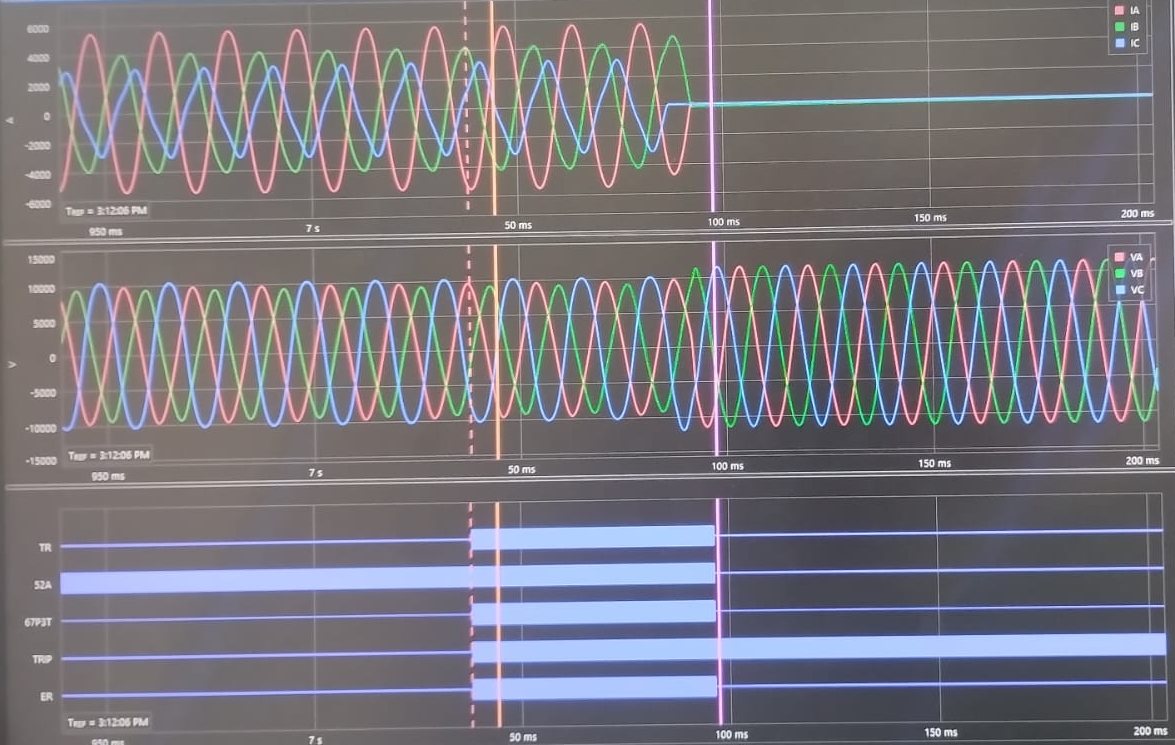
Oscillography
Disturbance Records
Waveforms and digital signals recorded by the IEDs are the main evidence to rebuild the event.
COMTRADE · Sequence of Events
A breaker opened with no apparent cause, protection operated outside its expected zone, or a trip was not executed. Without analysis, the plant goes back into service with the same uncertainty.
We rebuild the sequence of the event from IED records and check each hypothesis against the evidence.
The scope is set by the event and by the data available
Trips with no apparent fault, operations outside the expected zone, and checks of current, voltage, and trip circuits against the drawings.
Investigation of trips with no apparent fault or outside the expected zone, considering settings, polarities, CT and VT ratios, and logic.
Typical deliverables: Hypotheses assessed and ruled out · Nonconformities found · Corrective recommendations
Check of current, voltage, trip, and indication circuits against drawings and as-built records, with field tests when contracted.
Typical deliverables: Differences between site and drawings · Record of tests performed · Open items with owners
Commands not executed or delayed, trip circuits, trip circuit supervision, interlocking, and logic selectivity.
Analysis of commands not executed or delayed: trip circuits, output contacts, coils, auxiliary supply, and trip circuit supervision.
Typical deliverables: Circuit points checked · Evidence for each check · Recommendations to restore service
Assessment of interlocking logic, logic selectivity, and GOOSE messages involved in the event.
Typical deliverables: Logic analyzed · Expected vs. recorded behavior · Settings or test recommendations
Reading disturbance records and comparing applied settings with the current study and configuration files.
Reading IED disturbance records to identify quantities, operating times, picked-up elements, and the sequence of events.
Typical deliverables: Event timeline · Quantities and times analyzed · Protection elements picked up
Comparison between the settings applied in the IEDs, the current study, and the approved specification, including firmware versions and configuration files.
Typical deliverables: Settings differences table · Technical impact of each difference · What requires a study review
Four stages, adjusted to the contracted scope
Operations account, equipment involved, and what the analysis must answer.
Oscillography, events, settings, drawings, and recent interventions.
Timeline, hypotheses, and verification; bench or field tests if contracted.
Conclusions with level of evidence, limitations, and next steps.
What determines how deep and how reliable the conclusions can be
Oscillography, applied settings, drawings, and an account of the event.
A report with timeline, hypotheses assessed, and recommendations.
The root cause is not guaranteed: conclusions depend on the evidence and the contracted scope.
Images from the engineer’s professional career, with no client data
Oscillography
Waveforms and digital signals recorded by the IEDs are the main evidence to rebuild the event.
COMTRADE · Sequence of Events
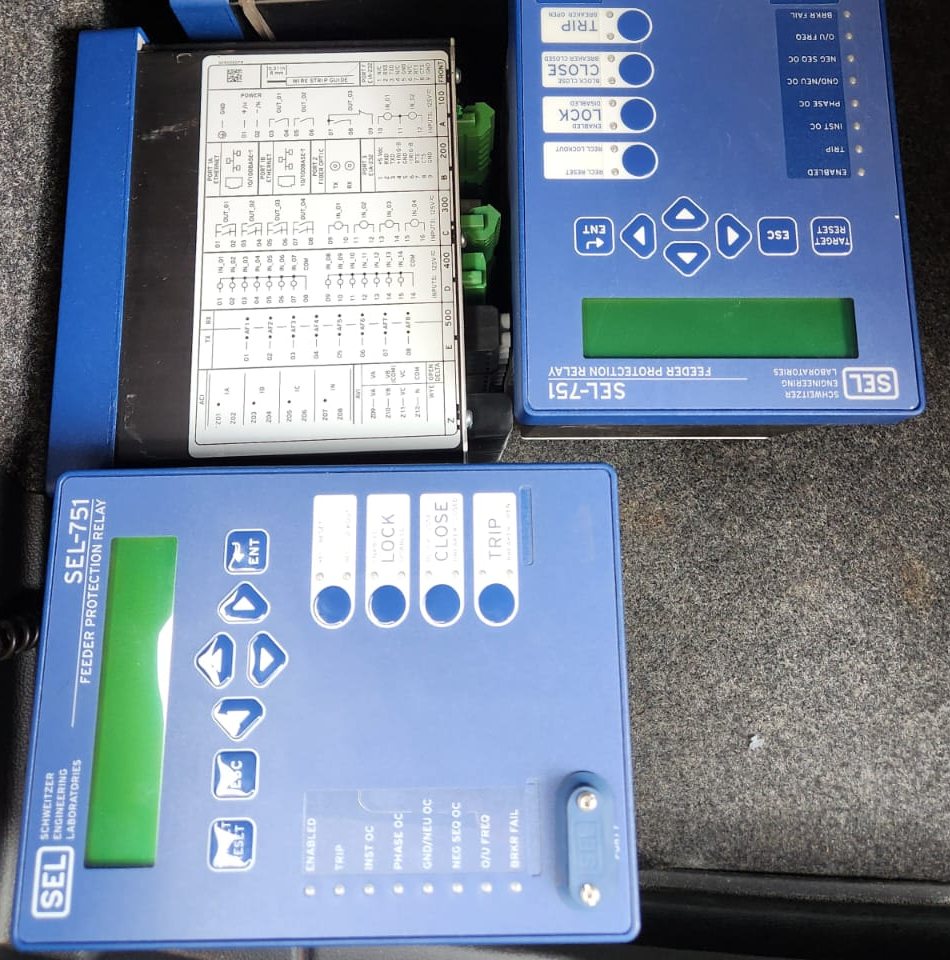
Settings and Configuration
Settings, logic, and versions applied in the IEDs are compared with the study and the approved specification.
Settings · Logic · Firmware
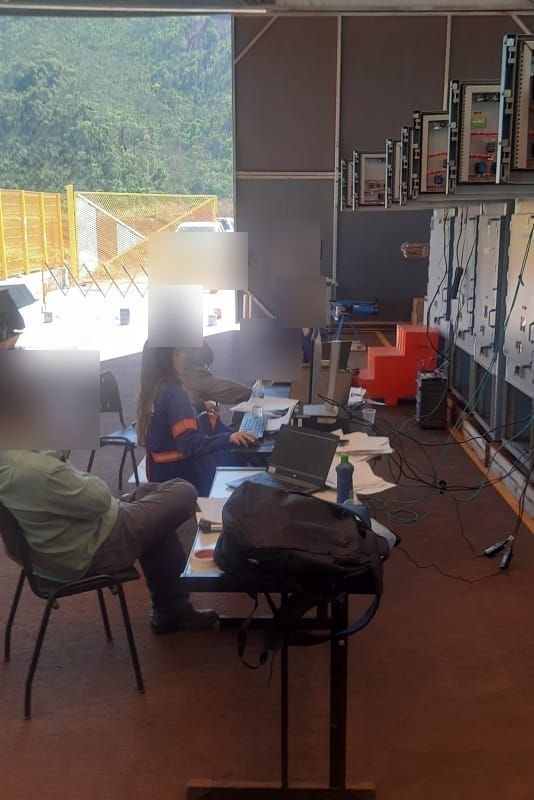
Verification
When contracted, bench or field tests confirm or rule out hypotheses raised during the analysis.
Secondary Injection · Functional Testing
Evidence, limits, and next steps
No. The analysis looks for the most probable cause based on the evidence available. When records are insufficient, the report states what could not be concluded and which data or tests would help move forward.
In many cases, yes: oscillography, event records, settings, and drawings allow an initial remote analysis. The need for field verification is stated in the report or planned in the proposal.
There is no need. In the first contact, describe the event and the records available. Files are exchanged after technical alignment, through the agreed channel and under the agreed confidentiality terms.
There is professional experience with ABB, Schneider Electric, SEL, and Siemens IEDs, and with commissioning involving GE IEDs. For other vendors, feasibility is assessed case by case.
When contracted, KR can implement and test the revised settings. Defining and approving the new settings remains with the responsible engineer named in the proposal.
Describe what happened, the equipment involved, and the records available. We assess whether the evidence supports an analysis and propose the scope.
Request a technical assessment